

Temporary Nurse Staffing for Urgent Coverage: A Practical Guide
Last Updated: November 14, 2026
Quick Summary
Temporary nurse staffing for urgent coverage means bringing in licensed nurses on short notice to fill open shifts without disrupting patient care. Urgent requests typically come from planned leave, same-day call-outs, and census surges, and each trigger needs a different response. Facilities with pre-shared credential requirements and a standing agency relationship can fill same-day shifts in hours.
- Start the search as soon as leave is approved so the temporary nurse can complete orientation before the first shift.
- Build a standing arrangement with a staffing partner before a crisis, not during one.
- Keep credential files current, since credentialing is the step that most often turns an hours-long fill into a multi-day one.
- In the first hour, check the float pool and per-diem list before treating a gap as an external request.
- Separate planned and unplanned coverage in your budget and track spend against a monthly allowance.
Table of Contents
- When Temporary Nurse Staffing for Urgent Coverage Becomes Necessary
- Urgent Care Staffing Models That Cover Every Gap
- Last-Minute Nurse Staffing: How Fast Agencies Can Fill a Shift
- Temporary Nurse Credentialing Checklist for Rapid Placements
- What Temporary Nurse Staffing Costs and How to Budget for It
- Onboarding Temporary Nurses Without Disrupting Patient Care
- Requesting Urgent Nurse Coverage from Hire Energy
- Frequently Asked Questions
When Temporary Nurse Staffing for Urgent Coverage Becomes Necessary
Temporary nurse staffing for urgent coverage is the practice of bringing in licensed nurses on short notice to fill open shifts without disrupting patient care. Urgent requests for nurse coverage generally come from three triggers: planned leave, same-day call-outs, and census surges. Each one demands a different response.
The first step is naming the trigger accurately. A vacation you saw coming needs a different playbook than a 6 a.m. call-out. Below, we break down all three, then show how to fill each gap fast.
Planned Leave and Extended Absences
Extended absences are the easiest gaps to solve because you can see them coming. Maternity leave, FMLA-protected time off, and scheduled vacations all create known holes in the schedule weeks or months ahead.
A common mistake is waiting until the week before to book coverage. Start the search as soon as leave is approved. That gives the agency time to match credentials and lets the temporary nurse complete orientation before the first shift.
Unexpected Vacancies and Same-Day Call-Outs
Same-day call-outs are where most facilities get burned. A nurse calls in sick two hours before a shift, and suddenly you’re short on a unit that can’t run short.
The fix is a standing arrangement with a staffing partner rather than a scramble through job boards. Build the relationship before you need it, not during the crisis.
Seasonal Census Surges and Acuity Spikes
Patient volume and patient acuity don’t hold steady. Summer census surges, flu season, and post-holiday admissions can push a unit past its staffing model overnight.
When census rises, matching staffing levels to patient volume becomes a math problem, not a judgment call. Track your ratio trends and set a threshold that triggers a coverage request.
Urgent Care Staffing Models That Cover Every Gap
The right staffing model depends on how long the gap lasts and how sure you are about the future. Most facilities need a mix, not a single approach.
| Model | Duration | Best For | Commitment |
|---|---|---|---|
| Temporary | Days to weeks | Call-outs, short surges | None beyond the assignment |
| Temp-to-Hire | Weeks to months | Hard-to-fill roles | Try before you commit |
| Direct Hire | Permanent | Stable, long-term roles | Full-time commitment |
Temporary staffing covers the immediate hole. Temp-to-hire lets you evaluate a nurse on the floor before extending a permanent offer. Direct hire is the right call once a role is clearly permanent and the local talent pool can support it.
Temporary, Temp-to-Hire, and Direct Hire Compared
Temporary staffing covers short-term needs. It’s suited to unexpected vacancies and short-term projects.
Temp-to-hire adds a trial period. You see how the nurse performs, how they fit the team, and how they handle your patient population before making a long-term offer.
Direct hire is for roles you know will stay open.
Last-Minute Nurse Staffing: How Fast Agencies Can Fill a Shift
Preparation helps urgent nurse staffing move faster, including keeping credentialing paperwork ready.
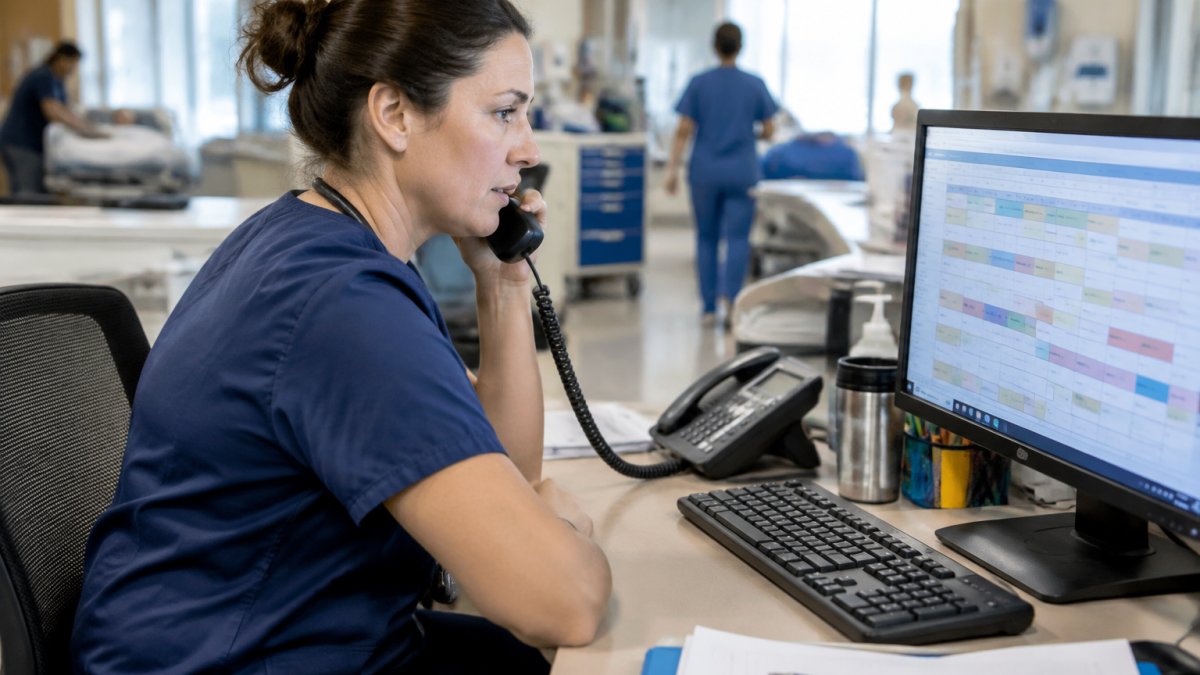
Credentialing is often a major source of delay in urgent coverage. Keeping a current credential file on every nurse you might call can shorten the timeline. For a deeper look at the tactics behind fast fills, see how to fill urgent staffing gaps fast.
A Realistic Response Timeline for Urgent Coverage
- Intake call (first 15-30 minutes). You share shift details: unit, start and end time, required license and certifications, ratio expectations, charting system, and any unit-specific competencies. The more you front-load here, the fewer back-and-forth calls later.
- Match (30-90 minutes). The agency pulls from its local pool of nurses who are already credentialed, available, and within a reasonable commute. Matching is fast when the pool is deep; it slows when the request is for a narrow specialty or a hard-to-reach shift time.
- Credential and compliance check (same day if files are current; 1-3 business days if not). Licenses, certifications, background check, health records, and competency documentation are verified against your requirements. This is the step that most often turns an hours-long fill into a multi-day one.
- Confirmation and profile delivery (within the same window as step 3). The nurse accepts, and you receive a profile with license number, certifications, and relevant experience so your charge nurse can plan assignments.
- First shift (arrival at the scheduled start). The nurse arrives with unit orientation materials in hand and a named contact for escalation.
What to Do in the First Hour When a Shift Is Uncovered
When a call-out lands and you have no internal coverage, the first hour decides whether the shift is filled or escalated. A workable sequence:
- Minutes 0-10: Confirm the gap is real. Check the float pool, per-diem list, and any nurse already on overtime eligibility before treating it as an external request.
- Minutes 10-20: Contact your staffing partner with the full shift packet, unit, shift time, required credentials, ratio, and any hard restrictions (for example, no first-shift solo assignment on a high-acuity unit).
- Minutes 20-40: Offer internal incentives in parallel, shift differential, bonus, or schedule swap, because an internal fill is usually cheaper and faster than an agency fill.
- Minutes 40-60: If no fill is confirmed, escalate to the house supervisor or nursing director and decide on a contingency: reduce census, adjust ratios within policy, or authorize the agency premium for same-day coverage.
Realistic Fill Times by Role, Shift, and Setting
A common pattern is that facilities with pre-shared credential requirements and a standing agency relationship fill same-day shifts in hours, while facilities that start credentialing at the moment of the request often wait days. The bottleneck is almost always step three, and the fix is keeping files current before the crisis.
Temporary Nurse Credentialing Checklist for Rapid Placements
Credentialing is the gatekeeper of rapid placements. Get it right and shifts fill in hours. Get it wrong and you’re exposed to compliance risk. Use this checklist before you request coverage:
- Active, unencumbered state license verified
- Current BLS and any unit-specific certifications
- Competency and skills checklist on file
- Background check and drug screen completed
- Health and immunization records current
- Orientation packet and unit-specific training confirmed
- Malpractice and liability coverage verified
A common mistake is treating credentialing as a one-time event. Keep files current so a nurse is always ready to deploy. For proven ways to cut the timeline, read how to reduce healthcare credentialing time and how to speed up clinical credentialing.
What Temporary Nurse Staffing Costs and How to Budget for It
Temporary nurse staffing costs depend on licensure, specialty, shift urgency, and assignment length. Pricing depends on the specific request, so request a quote for current pricing.
Budget around the cost drivers rather than a fixed figure. Pricing depends on quantity, dates, and delivery, so request a quote for current pricing.
The Cost Drivers That Move Urgent-Placement Pricing
Most practitioners find the same handful of factors explain most of the spread in urgent-placement pricing:
Agency Rates vs. Overtime vs. Float Pools: A Decision Framework
The CFO question is fair: why pay agency rates when you already spend on internal recruiting and overtime? The honest answer is that each coverage option carries a different cost structure, and the right choice depends on the gap.
How to Budget for Urgent Coverage
A workable budget approach is to separate planned and unplanned coverage, and to track coverage spend against a monthly allowance and the triggers that drive it.
To understand how pricing models work, see staffing agency pricing models explained. For current rates, request a quote directly.
Onboarding Temporary Nurses Without Disrupting Patient Care
Onboarding temporary nurses well matters from the first shift.
Keep a short, repeatable first-shift handoff:
- Assign a unit buddy for the first shift
- Walk the layout: supplies, medication room, code locations
- Review charting and documentation expectations
- Confirm the charge nurse and escalation path
- Check in at the two-hour mark
Orientation also matters for your permanent staff, who benefit from knowing a temporary nurse is coming and what they will cover.
Requesting Urgent Nurse Coverage from Hire Energy
When a shift is at risk, speed and screening matter. Hire Energy connects facilities with qualified professionals through local workforce pools and screening processes.
Our flexible models cover temporary, temp-to-hire, and direct hire, and we support scalable workforce needs for seasonal demand. Our process includes comprehensive screening and background checks. If you’re ready to shorten your time to hire, learn how to reduce time to hire in healthcare, then reach out to Hire Energy with your shift details.
Urgent coverage is a test of preparation, not luck. The facilities that fill gaps fastest are the ones with a staffing partner already in place and credentialing files ready to go. Hire Energy brings speed to fill, local talent pools, and comprehensive screening to every request, with flexible temp, temp-to-hire, and direct hire models built around your census. Get started with Hire Energy and keep every shift covered without sacrificing patient safety.
Frequently Asked Questions
How quickly can a nurse staffing agency fill an urgent shift?
Response time depends on the shift type, your location, and how complete your request is. For same-day coverage, agencies with active local pools can often confirm a temporary nurse within hours; overnight or weekend requests may take longer. Providing unit type, shift hours, required certifications, and patient acuity up front shortens fill time. For hard-to-fill specialty shifts, plan on a longer window and ask the agency for a realistic estimate before you commit.
What information should a facility provide when requesting temporary nurse coverage?
Share the unit and shift times, required licenses (RN or LPN), certifications such as BLS or ACLS, patient acuity and nurse-to-patient ratio, EHR system, dress code, and any floating or orientation expectations. Include the start date and expected duration, plus a contact who can approve timesheets. Complete credentialing documents and a clear job description reduce back-and-forth and speed up placement.
How much does last-minute nurse staffing cost?
Pricing depends on shift length, specialty, urgency, and local market conditions, so agencies quote per request rather than publish fixed rates. Compare the total cost against overtime, delayed discharges, and agency reliance, not just the hourly bill rate. Ask for a written quote that separates bill rate, overtime rules, and any conversion fees, and request current pricing directly from Hire Energy.
How can facilities maintain patient safety when using temporary nurses?
Verify credentials before the first shift, pair the temporary nurse with a preceptor for the first shift, and provide a unit-specific orientation covering emergency codes, equipment, and documentation. Assign patient loads that match the nurse’s documented competency, and check in at the end of the shift. Keep a competency checklist on file and review incident reports promptly. Clear handoff communication between permanent and temporary staff is the strongest safeguard for quality of care.