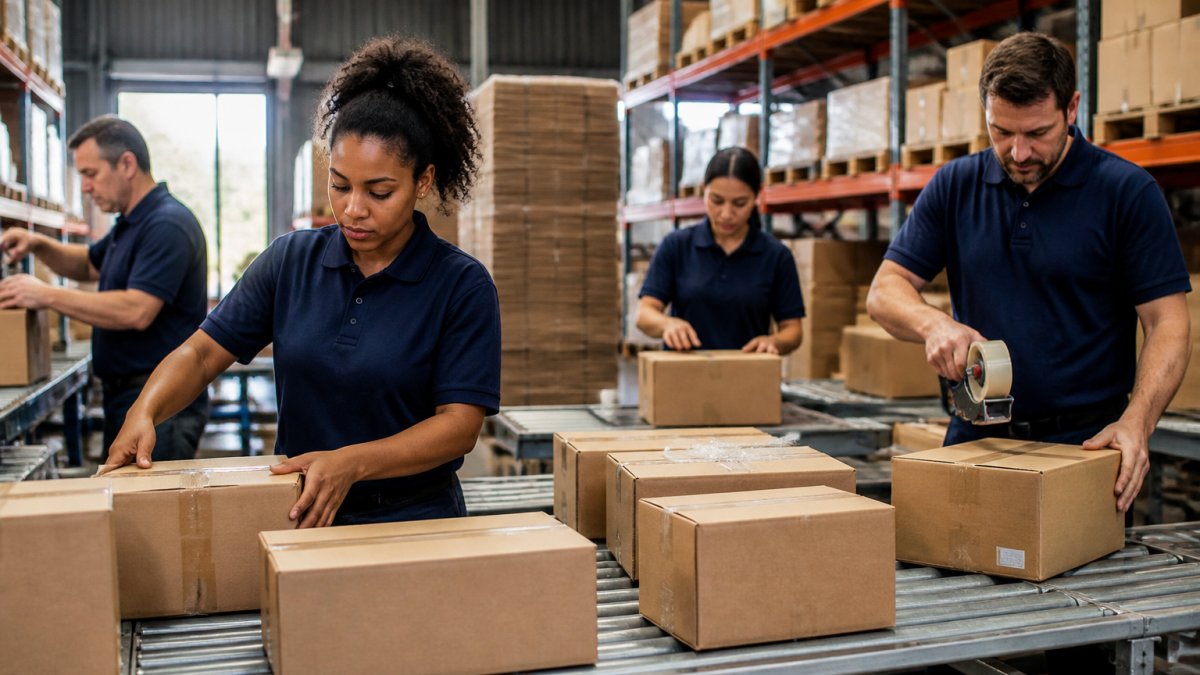
Are Flexible Staffing Models Right for Your Plant?
Last Updated: October 31, 2026
Quick Summary
Flexible staffing models for manufacturing split your workforce into a stable core of direct hires and a variable layer of temp, temp-to-hire, or part-time workers that scales with demand. Match the model to your demand pattern: temporary labor for peaks under eight weeks, temp-to-hire for full seasons, and direct hire for core roles.
- Pull twelve months of output data and mark the peaks before choosing a staffing model.
- If a peak lasts under eight weeks, temporary manufacturing staffing usually wins.
- Cross-training is the cheapest flexibility you can build, costing training hours rather than headcount.
- Under OSHA rules, temporary workers are entitled to safety training and hazard information before they start work.
- Run a new model as a pilot on one line for a full demand cycle before a plant-wide switch.
Table of Contents
- What Flexible Staffing Models Actually Mean on a Production Floor
- Manufacturing Staffing Strategies Compared Side by Side
- Where Temporary Manufacturing Staffing Fits in a Workforce Plan
- Building a Seasonal Manufacturing Workforce Without Overhiring
- Cross-Training Manufacturing Employees to Absorb Demand Swings
- Safety, Quality, and Compliance for Contingent Workers
- Which Flexible Staffing Model Fits Your Operation?
- Frequently Asked Questions
What Flexible Staffing Models Actually Mean on a Production Floor
Flexible staffing models for manufacturing are workforce arrangements that let a plant scale headcount up or down with demand instead of locking every position into a fixed, year-round hire. Plants that treat staffing as a dial, not a switch, are generally better positioned to handle demand swings.
The core idea is simple. You separate your workforce into a stable core and a variable layer that moves with production schedules. Most plants already do this informally. The ones that do it well write it down.
The Four Arrangements Most Plants Use
- Direct hire: Full-time employees on your payroll. Best for skilled roles you need year-round.
- Temp-to-hire: Workers start on a trial period, then convert. Lets you evaluate on the floor before committing.
- Temporary / contingent labor: Short-term workers for peak periods, projects, or coverage gaps.
- Part-time and project staffing: Scheduled around specific shifts or builds rather than a full week.
Each arrangement carries different cost, risk, and lead time. The mistake we see most often is defaulting to direct hire for every opening, then scrambling when volume drops.
Manufacturing Staffing Strategies Compared Side by Side
Here is how the main approaches stack up against each other in practice.
| Model | Time to Fill | Cost Profile | Best For | Main Trade-off |
|---|---|---|---|---|
| Direct hire | Longest | Highest upfront | Core skilled roles | Slow to adjust |
| Temp-to-hire | Medium | Medium | Proving out a role | Trial period adds time |
| Temporary labor | Fastest | Variable | Peaks and gaps | Onboarding overhead |
| Part-time / project | Fast | Variable | Predictable sub-full-time needs | Scheduling complexity |
| Hybrid (core + flex) | Mixed | Balanced | Demand-driven plants | Requires planning |
The hybrid model is the one worth studying. Comparing models means comparing costs, so it helps to have staffing agency pricing models explained for employers. It combines a permanent core workforce with a flex layer, so you are not overstaffed in slow months or understaffed in busy ones.
How to Match the Model to Your Demand Pattern
Start with your production history, not your gut. Pull twelve months of output data and mark the peaks. Then ask three questions:
- Is the swing predictable, like a seasonal manufacturing workforce pattern?
- How long does each peak last, weeks or months?
- Which roles can absorb a new worker quickly?
If a peak lasts under eight weeks, temporary manufacturing staffing usually wins. If it runs a full season, temp-to-hire makes more sense because you keep the good workers. If the role is core and permanent, hire direct.
Where Temporary Manufacturing Staffing Fits in a Workforce Plan
Temporary staffing is not a last resort. It is the shock absorber in your labor capacity plan.
Use it for coverage during vacations and leave, for short builds, and for unexpected order spikes. Screening and background checks let your supervisors focus on production, not paperwork. If you are new to working with agencies, our guide on how to use temporary staffing agencies effectively covers the practical steps. When a gap opens with no warning, how to fill urgent staffing gaps fast is the playbook to reach for.
The thing most plants get wrong is treating temps as disposable. Workers who feel like part of the team show up on time and stay longer. That matters for absenteeism and retention.
Building a Seasonal Manufacturing Workforce Without Overhiring
Overhiring is the quiet cost nobody budgets for. You staff up for the busy months, then carry wages, benefits, and idle time through the slow ones.
A seasonal plan avoids that by matching headcount to the calendar. Map your peak months, then build a flex layer sized to the gap between peak and baseline output. Convert your best seasonal workers to permanent roles when they prove out, and release the rest cleanly when the season ends.
Employers weighing this route often want the full picture first, so it helps to understand what a seasonal model delivers before you commit.
Watch out: promising seasonal workers a permanent slot you cannot guarantee. Word travels on the floor, and broken promises wreck your rehire rate next season.
Cross-Training Manufacturing Employees to Absorb Demand Swings
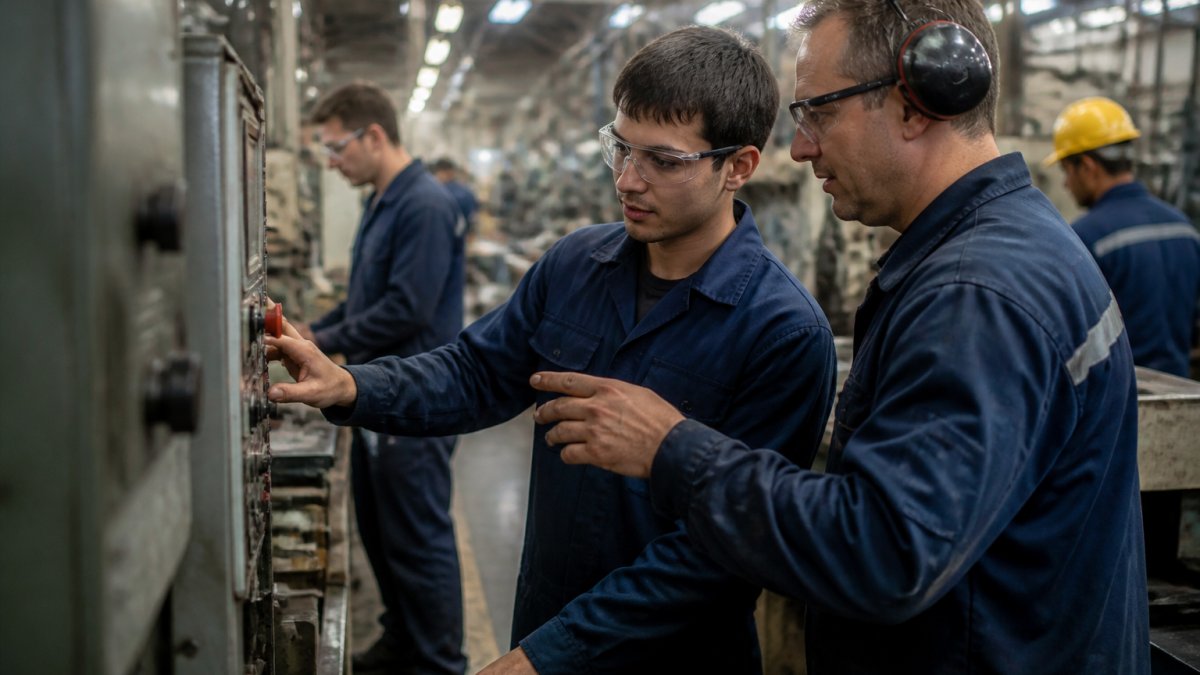
Maintaining consistent oversight during these transitions requires standardizing safety protocols to ensure that every worker remains protected regardless of their specific shift or experience level.
Cross-training is the cheapest flexibility you can build. It costs training hours, not headcount.
The goal is simple: every critical station has at least two people who can run it. When demand shifts or someone calls out, you move a trained worker instead of scrambling to hire. A common approach is to pair each operator with a backup and rotate them through slow periods.
- Identify the three to five stations that bottleneck production.
- Train a second operator on each one.
- Track who is signed off on what.
- Refresh skills quarterly so nobody gets rusty.
A float pool works the same way at a larger scale: a small group of cross-trained workers who move wherever the schedule needs them.
Safety, Quality, and Compliance for Contingent Workers
Contingent workers face the same hazards as everyone else, so they need the same protections. Under the Occupational Safety and Health Administration rules, temporary workers are entitled to safety training and hazard information before they start work. Skipping that step is where plants get into trouble.
Build a short, standard onboarding for every contingent worker:
- Site safety orientation before the first shift
- Machine-specific training for their assigned station
- Clear quality checkpoints and who to ask when something looks wrong
- A named supervisor contact for the duration of the assignment
Quality control is the other half. Temps who understand the spec catch defects early. Those who do not become your rework problem. Pair every new worker with a buddy for the first week, and check their output before it leaves the station.
Which Flexible Staffing Model Fits Your Operation?
The right model depends on your demand pattern, your role mix, and how fast you can train. There is no universal answer, but there is a clear order of operations.
- Map twelve months of production data.
- Separate core roles from variable ones.
- Choose a model for each group: direct hire for core, temp or temp-to-hire for variable.
- Build cross-training so your core can flex.
- Review quarterly and adjust.
What separates a decision from a guess is measurement. Before you commit to a model, agree on the numbers that will tell you whether it is working. A practical scorecard for a manufacturing flex program tracks:
- Labor cost per unit, total labor cost divided by units produced. This is the number that lets you compare a temp-heavy month against a core-heavy month honestly.
- Overtime percentage, overtime hours as a share of total hours. Rising overtime is often the first sign your flex layer is too small.
- Absenteeism rate, unplanned absences as a share of scheduled shifts, tracked separately for core and contingent workers.
- Time to fill, days from requisition to a worker on the floor. This tells you whether your staffing partner can actually respond at the speed your demand requires.
- Utilization, productive hours as a share of paid hours for the flex pool. A flex layer that sits idle is a cost, not a cushion.
- Throughput and schedule attainment, units completed against the plan, and the share of schedules met on time.
- Scrap and rework rate, defects as a share of output, watched closely in the weeks after new contingent workers arrive.
Pick three or four of these metrics, set a baseline before you pilot a model, and review them monthly. A model that improves cost per unit while quietly raising scrap or absenteeism is not working, it is moving the cost somewhere you are not looking.
Run the comparison as a pilot rather than a plant-wide switch. Choose one line or work center, staff it under the candidate model for a full demand cycle, and hold the scorecard steady against a comparable line. That gives you a defensible answer instead of an opinion.
For plants that want a structured path, a step-by-step employer guide to industrial staffing can walk through the process from first call to steady coverage. Before you sign anything, get the cost picture straight, because the cheapest headline rate is rarely the cheapest total. Current pricing depends on quantity, dates, and delivery, so check Hire Energy’s website for current prices or a quote.
Treating staffing as a system, not a scramble, and tracking it with numbers rather than anecdotes is a sound approach.
Frequently Asked Questions
What is a flexible staffing model in manufacturing?
It is a workforce plan that blends a stable core of full-time employees with contingent labor, such as temporary or contract workers, so headcount can rise and fall with production demand. Instead of hiring to your peak month and carrying that cost all year, you size the core team to your baseline volume and add flexible staffing on top during surges, shutdowns, or large orders. The goal is coverage without overstaffing.
When should a manufacturer use temporary staffing instead of direct hire?
Temporary manufacturing staffing makes sense when the need is finite or unproven: a seasonal peak, a short-term project, coverage for leave, or a new line you are still validating. Direct hire fits roles tied to core production, proprietary processes, or long-term skill development. A temp-to-hire arrangement splits the difference, letting you evaluate someone on the floor before committing to a full-time offer.
How can manufacturers maintain quality and safety with a flexible workforce?
Treat onboarding as non-negotiable for every worker, regardless of assignment length. That means site-specific safety orientation, machine lockout procedures, and documented sign-off before anyone touches equipment. Pair each contingent worker with a trained buddy, restrict them to tasks they have been cleared for, and audit first-article quality during their first shifts. Clear scope in the staffing agreement also helps: spell out who handles training and who verifies it.
How do you plan staffing levels around changing production demand?
Start with a rolling forecast built from order history, booked orders, and known seasonality, then convert it into labor hours by work center. Compare that to your current core workforce capacity to see the gap. Flexible staffing fills the gap, whether through temporary manufacturing staffing, cross-training manufacturing employees to cover multiple stations, or shifting schedules. Review the forecast monthly so you are adjusting before the peak arrives, not during it.
Flexible staffing only pays off when the partner behind it moves as fast as your demand does. Hire Energy supports plants with rapid speed to fill, local workforce pools, and comprehensive screening and background checks. Our flexible hiring models cover temp, temp-to-hire, and direct hire, with scalable workforce support for high-volume peaks. Get started with Hire Energy and build a workforce that flexes with your production schedule.